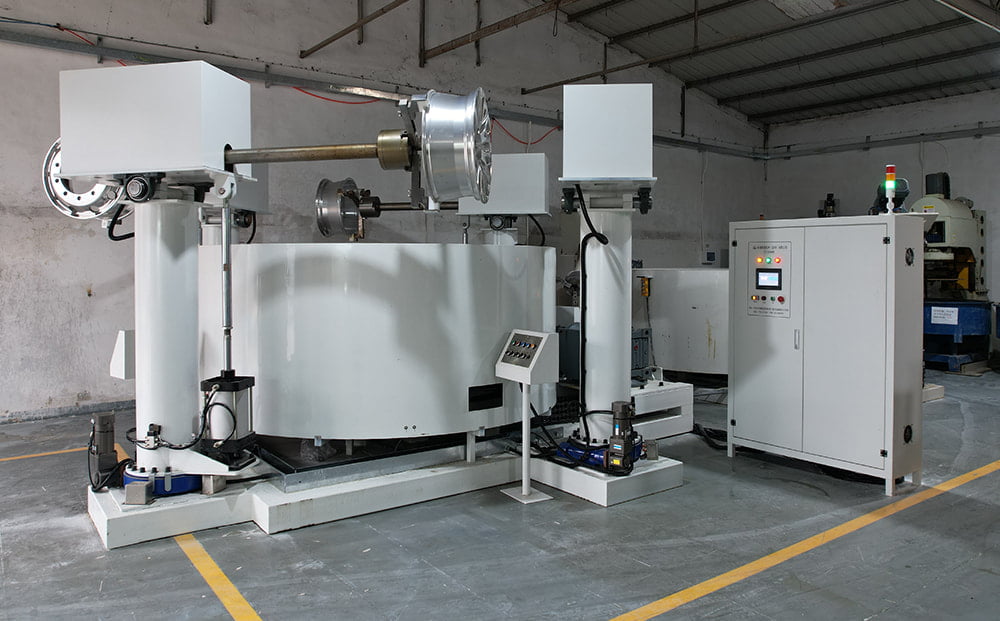
In the wheel manufacturing industry, ceramic polishing machine plays a crucial role. polishing machine acts like a magical artist to give wheels a shining boost and superior quality.
The function of a polishing machine
Firstly, in the initial stages of wheel manufacturing, ceramic polishing machine will remove imperfections and roughness from the wheel’s surface. Newly cast or forged wheels often have uneven areas, burrs, and minor scratches. The ceramic polishing machine is using high-speed rotating polishing discs. Suitable polishing materials can quickly and effectively remove these imperfections, making the wheel hub surface smooth and flat.This not only improves the wheel’s appearance quality but also lays a good foundation for subsequent processing steps.
Secondly, ceramic polishing machine can greatly enhance the aesthetics of wheels. Polished wheels have a mirror-like smooth surface that reflects the surrounding environment, giving them a stylish and high-end feel. Whether it’s aluminum alloy wheels or wheels made of other materials, polishing machine can bring out their unique metallic texture and luster. In today’s automotive personalization market , we can paint or electroplat polished wheels in various colors according to customer needs that further enhance their visual appeal and meet the aesthetic demands of different consumers.
Thirdly, polishing helps improve the durability of wheel rims. A smooth surface reduces the adhesion of dust, dirt, and moisture, lowering the risk of corrosion. Simultaneously, the polishing process makes the wheel rim surface denser, enhancing its hardness and wear resistance, and extending the wheel rim’s lifespan. During vehicle operation, wheel rims are subjected to various road conditions and environmental challenges, and polished wheel rims are better able to withstand these challenges, maintaining good performance and appearance.
Finally, polishing machine also plays a crucial role in quality control during wheel manufacturing. Polishing the wheels allows for more direct detection of surface defects and unevenness, enabling timely adjustments and repairs. This ensure that every wheel produced meets stringent quality standards to improve the overall quality of the product.